June 15, 2026
June 19, 1865. The news reaches Galveston, Texas, fourteen weeks after Appomattox. The war is over. The enslaved are free. What follows is not liberation but a long reckoning, and out of that reckoning, across the flatlands of West Tennessee and the Mississippi River Valley, comes a music that would change the world.
Most people know that the blues came from this part of the country. Fewer people stop to think about why. And why that matters on Juneteenth.
The corridor that runs through Tipton, Fayette, Lauderdale, and Haywood Counties in West Tennessee, south through DeSoto County in Mississippi and across the river into Crittenden County, Arkansas, is not a place that appears in the standard accounts of American history. It should.
This is the ground where cotton was the economy for more than a century, where enslaved people built an agricultural empire with their bodies and their labor, and where their descendants, suddenly legally free after June 19, 1865, were left to rebuild their lives in a landscape that had not changed nearly as much as the law had. The plantation structures remained. The poverty remained. The violence remained. And the people remained, doing what people do when formal systems fail them: making meaning out of what they had.
The blues is what they made.
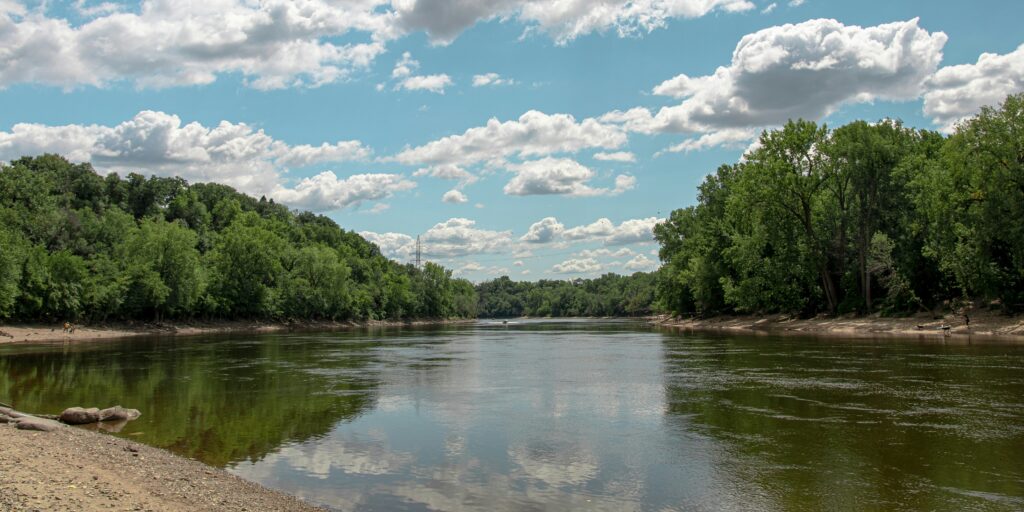
The history of the blues gets compressed into mythology too quickly. A crossroads. A deal with the devil. An origin story that is more compelling, in a way, than the truth, though the truth is more interesting than most people realize.
The blues developed in the decades following Reconstruction as a secular form of expression rooted in the field hollers, work songs, and spiritual traditions that had sustained African American communities through centuries of bondage. It was music made by people who were technically free but living under conditions that tested the meaning of that word daily. It was music about real things: hard work, hard luck, broken relationships, the river, the road, the possibility of somewhere else.
The specific geography of this corridor shaped its specific character. The flatness of West Tennessee, the proximity of the Mississippi, the particular combination of isolation and community in small towns like Brownsville, Covington, and Ripley, all of it left its mark on how the music sounded and what it said.
This is not a museum exhibit. It is a living lineage. And Juneteenth is the right day to think about where it came from.

Before you can understand what Juneteenth means in this corridor, you need to understand what happened on the Chickasaw Bluffs above the Mississippi River in Lauderdale County on April 12, 1864.
Fort Pillow had been a Union garrison since 1862, and by the spring of 1864 it was held by roughly 580 men, nearly half of them Black soldiers of the United States Colored Troops. On that April morning, Confederate cavalry under Major General Nathan Bedford Forrest attacked and overwhelmed the fort. What followed was not a conventional battle. It was a massacre.
Of the nearly 300 Black soldiers at Fort Pillow, only about 58 were captured alive. The rest were killed, most of them after a flag of surrender had been raised, because Confederate policy held that Black men in Union uniforms were not prisoners of war but insurrectionists subject to execution rather than capture. Seventy percent of the white soldiers at Fort Pillow survived. Thirty-five percent of the Black soldiers did.
The survivors carried “Remember Fort Pillow” as a battle cry through the remaining months of the war. They were fighting for the freedom that Juneteenth would announce fourteen months later.
Fort Pillow State Park stands on that ground today. The interpretive center does not look away from what happened here, and the bluffs above the Mississippi, stunning in June when the river runs wide and the trees are full, carry a weight that the landscape alone communicates. If you visit one place along this corridor on or around Juneteenth, this is the one. The park sits off State Route 87 near Henning, Tennessee, about an hour north of Memphis. Allow a half day. It deserves it.
Haywood County, Tennessee, and its county seat of Brownsville, produced one of the most remarkable concentrations of blues musicians in the history of the form. Three names stand above the others.
Sleepy John Estes was born in Ripley in 1899 and grew up in Brownsville after his family moved there in 1915. His guitar work and his lyrics, specific, plaintive, rooted in the actual details of actual life in this county, influenced musicians across two generations. Hammie Nixon, born in Brownsville in 1908, played harmonica alongside Estes for fifty years, the two of them first recording together for Victor Records in 1929. Yank Rachell, born nearby around 1903, played guitar and mandolin with the pair in a jug band that worked the Brownsville area throughout the early 1920s before they all began recording for major labels.
In 1964, nearly four decades after those first recordings, all three appeared at the Newport Folk Festival. The music they had made in Brownsville and the surrounding cotton-field towns had, by then, traveled the world and been covered by artists in England and California who had never set foot in Haywood County.
Brownsville’s connection to this history is still visible and felt in the town. Sleepy John Estes is buried here. The annual Exit 56 Blues Festival, held in Brownsville each year, keeps that legacy in active conversation with the present rather than preserving it under glass.

One of the most direct ways to understand what Juneteenth means is to look at what happened in Fayette County, Tennessee, ninety-five years after June 19, 1865.
In 1960, roughly seventy percent of Fayette County’s population was Black. Fewer than a dozen Black residents had ever cast a ballot. That year, 1,400 Black residents registered to vote. In direct retaliation, white landowners evicted 257 Black sharecroppers from their homes. The White Citizens Council distributed a list of registered voters to local merchants, who then refused to sell food, gasoline, or banking services to anyone on it. Insurance policies were cancelled. Jobs were terminated.
The displaced families set up Tent City, an encampment on land donated by a local Black landowner named Shepard Towles, and they lived there through the winters of 1960 and 1961 in conditions of genuine hardship, because they had decided they were not willing to stop exercising their legal rights. It took a federal court order in 1962 to end the reprisals.
This is the history that Juneteenth, honestly observed, asks you to hold alongside the proclamation. The formal freedom of 1865 was not the end of the story. The blues understood that from the beginning. The people of Fayette County demonstrated it a century later, on the same land.
Juneteenth on the Blues Backroads corridor is not a packaged heritage experience. It is a genuine encounter with the places where American freedom was contested, expressed, delayed, and insisted upon across nearly two centuries of living history.
Start at Fort Pillow State Park in Henning, where the river and the history both run deep. Spend real time in the interpretive center and walk the bluffs before you leave. Drive south to Brownsville, find the historical markers for Sleepy John Estes and Hammie Nixon downtown, and take the measure of a town that spent a hundred years producing world-changing music while most of the country was not paying attention. Head west into Fayette County, toward Somerville, with the Tent City story in mind, and look at the landscape these families refused to be driven from.
Bring someone who does not already know this story. That is the best possible use of a day like this.
Blues Backroads exists because these places, and the people who made them matter, deserve to be known. Juneteenth is the right time to start.
Follow Blues Backroads on Facebook and Instagram for Juneteenth events and local updates throughout June.
Share Backroad Memories